Jenny Santorino has had her life mapped out since before she could walk. Raised to carry on her father’s legacy, by twenty-eight she has become one of the world’s most accomplished thieves.
She’s also come to hate the life she never chose.
After sabotaging the biggest job of her career, Jenny finally does what she’s always claimed she wanted: she disappears. With a new name and a clean record, she reinvents herself on the straight and narrow, landing a coveted job at a Seattle tech giant just as Big Tech sets its sights on Hollywood. It’s the perfect place to build a new life—and, she hopes, her final alias.
But the past has a way of finding you.
When Jenny’s cousin arrives with news that an old nemesis has resurfaced to settle a score, the life she buried comes rushing back. To protect the future she’s building, Jenny reluctantly agrees to one last job. There’s just one complication: the job will unfold at the movie premiere Jenny has spent months bringing to life.
Now, caught between the life she escaped and the one she built to replace it, Jenny is beginning to discover that walking away from one is not the same thing as choosing another.
And to finally be free, she’ll have to do something no one ever taught her:
Decide who she wants to be.
***

A good input metric is one that enables us to monitor and change our behavior. It should have the following characteristics: (1) Focus – it measures one thing; (2) Ownership –a specific person is accountable for its performance and accuracy of the measurement; (3) Benchmark – there is a target which informs whether or not performance is satisfactory.
Data is an investment, just like any other asset. This is why we have to think about it as such.
Whose responsibility are they and why should we treat them more like tennis than football? Just take a look at Johnsonville Sausage.
When you are first starting out you want to make a huge impact. It can be tempting to seek out the biggest problem and dive in. Caution. That’s not the purpose of your first deliverable. The purpose is to set an impression.
This is the third and final installment of our New Adventure Series capturing the thoughts and feelings following the birth of my children. (ref: Next Adventure, Lila 2019; New New Adventure, Ciara 2021). Now Ciara’s a big sister too. So let the games begin in this Last Adventure into parenting with the addition of blessing #3, baby Chase. As my cousin Tim said, it’s a full house, Queens over Kings…
I recently learned the difference between story and plot. Thats what I’ve been working on for the past 2 years…
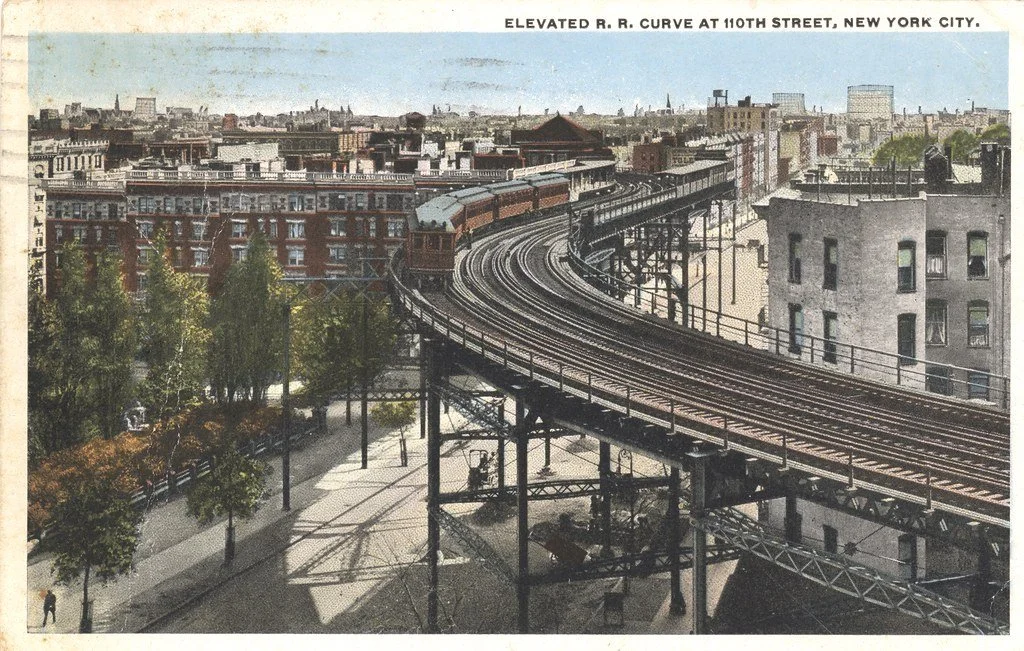
1960's Harlem and a Pulitzer Prize winner enters the genre with 'HARLEM SHUFFLE'. Here's some lessons.
Why they are a litmus test and have resulted in more re-writing than any other editing aspect.
In some heists the floor is hot lava. In others you can scamper right across the lobby. Here are 5 misc. things I’ve learned thus far on the genre and the process of writing.
Three (plus one) hidden gems I uncovered this week from circa 1983, for anybody on their grind; from John Gardener's 'On Becoming A Novelist'
A list of my research books with cool tidbits before I retire them. (It’s my attempt to move on from toiling away on Act 1).
How often do best selling authors tell you what the character is thinking? (Spreadsheets inside.)
There are three states of information in a book. You either know: (1) More than the hero; (2) Less than the hero or; (3) The same as the hero.
And there’s one more state in a heist.
Here is some more research into why this is taking so long: I've unintentionally been tackling this story in three stages.
Today I have three small lessons I’ve collected and observed lately. In other words, three more things I am in the process of overthinking.
This post is a really long way of describing all about how I eventually stepped away from using spreadsheets to do the actual writing (and finally finish) my manuscript.
I've got the edits back...time to crank.